Fort Erie Garage Door ProsService bulletin 2 of 3
Wind-Rated Garage Door Replacement: step by step
Changing from two single doors to one double door affects more than curb appeal.
Fort Erie, Ontario · Garage Doors · open 24/7
Changing from two single doors to one double door affects more than curb appeal. The broader span changes how the door bends under pressure and how forces reach the side jambs. Replacement planning therefore starts with the new finished dimensions, structural framing, required design pressure, headroom, and operator location. A matching reinforced door package is then installed with its specified track and attachment details. Springs are sized for the finished weight, seals are set against the opening, and the operating system is tested after the conversion work is complete.
Check the operating equipment
A reinforced replacement may weigh differently from the door it replaces, so the opener and its attachment receive a separate review. The technician identifies the operator type, rail length, mounting support, door-arm geometry, reinforcement bracket, travel limits, and condition of the safety sensors. Manual locks are also noted because they must coordinate with powered operation. This information shows whether the existing equipment suits the finished assembly, needs adjusted mounting, or belongs in a separately planned operator update.
Set tracks and attachments
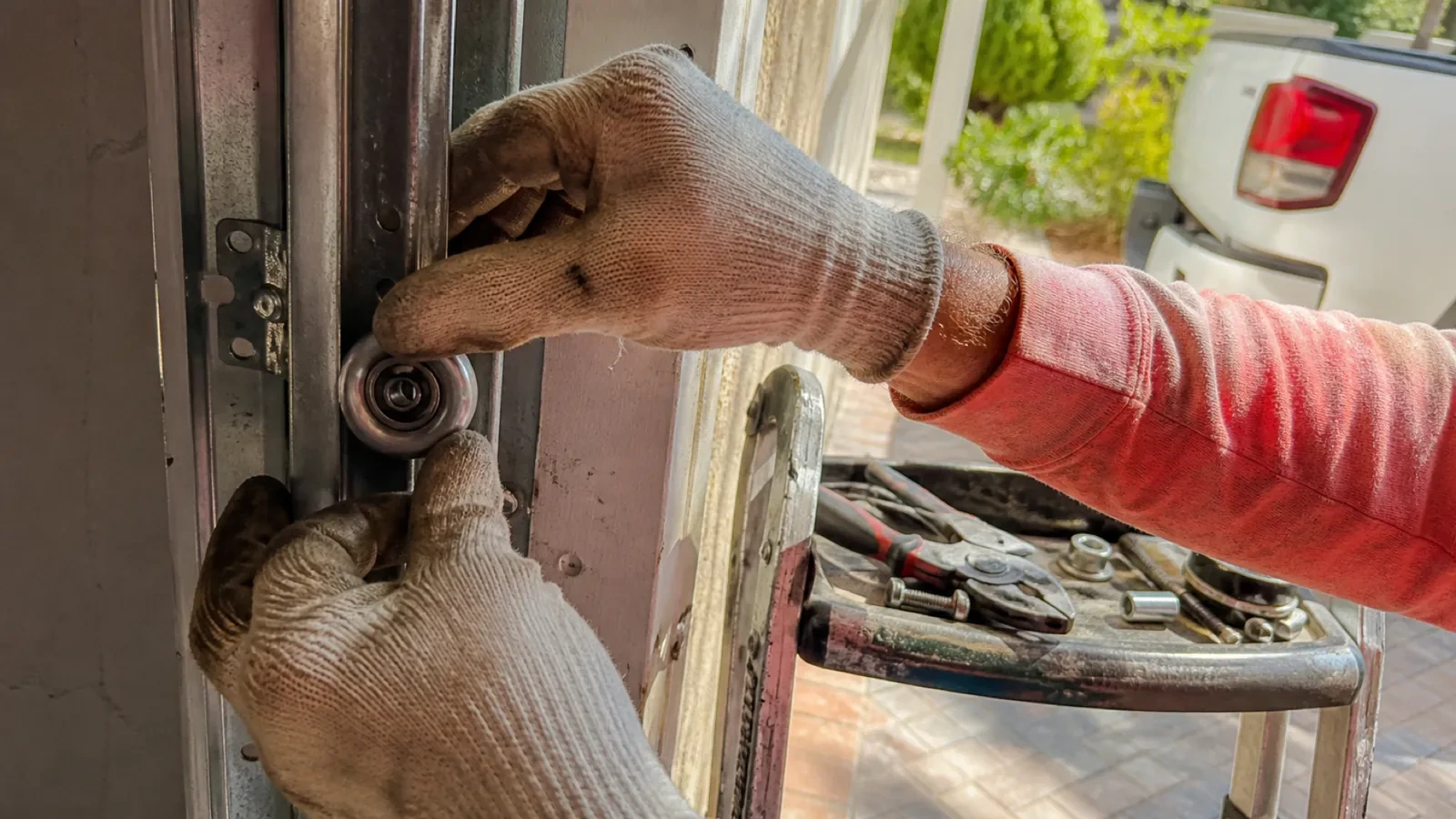
Vertical tracks are positioned to the specified spacing and secured with the brackets and anchors called for by the selected configuration. Flag brackets, horizontal tracks, rear supports, and any heavier-gauge members are assembled square to the opening. Fastener type, embedment, edge distance, and spacing follow the installation details for the mounting material. Both sides are checked together so the reinforced door has room to travel freely while its hardware remains firmly connected when wind pressure acts across the closed sections.
Simple seasonal observation
A few visual checks help preserve the installed configuration. From inside the closed garage, look for loose strut or hinge fasteners, rollers moving out of line, daylight at the seals, corrosion, or changes in the jamb material. Clear leaves and grit from the floor near the tracks, and keep stored items away from moving parts. After freeze-thaw weather, note whether the bottom seal remains seated evenly. Any developing bow, rub, or unusual noise provides a clear reason to arrange a closer inspection.