Book soon Openers · Oakhill Forest
Photo-Eye Sensor Alignment or Replacement in Oakhill Forest
On bright mornings the door will not close, then by lunchtime it behaves itself. The garage faces the low sun, and the light reaches straight across the floor to one of the little black sensors.
Call now · open 24/7(289) 599-1971Right now
Before the door is looked at
Call (289) 599-1971, open 24/7.
Never bypass, tape over or relocate the sensors to make a door close; a door that reverses is reporting something worth fixing.
In plain words
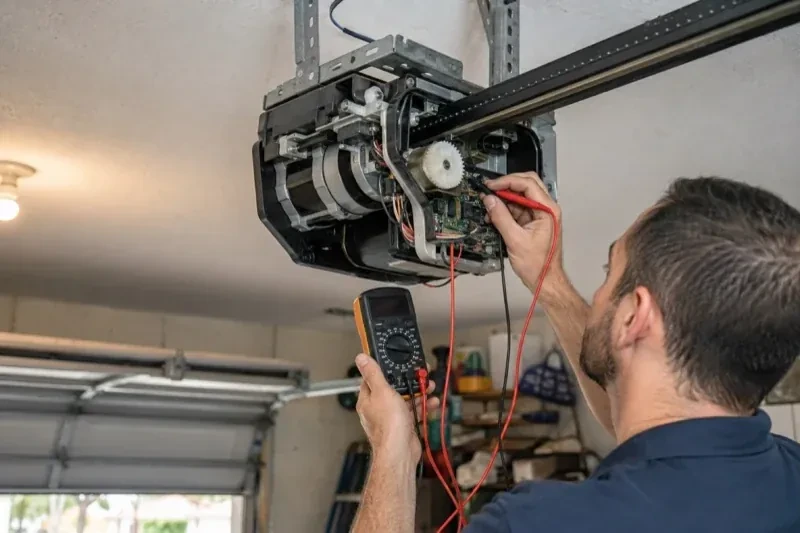
The sensors are only as good as the thin two-conductor wire that links them to the opener. It runs from the low-voltage terminals on the head unit along the ceiling and down each wall to the floor, stapled as it goes, and it is easily pierced, cut during renovations, chewed, or pulled loose at the terminals. When both sensor lights are dark, or the opener's code says the circuit is open or reversed, the technician tests the run end to end, repairs the damaged section or replaces the whole run, checks polarity at the terminals, and clips the new wire clear of the track.
How the visit goesSince shelving went up along the garage wall, the door will not close and both sensor lights are dead. A screw or staple may have gone through the thin wire that runs from the opener to the sensors.
Photo-Eye Sensor Alignment or Replacement · Oakhill Forest
How the visit goes
- 1
Brackets and height on both sides
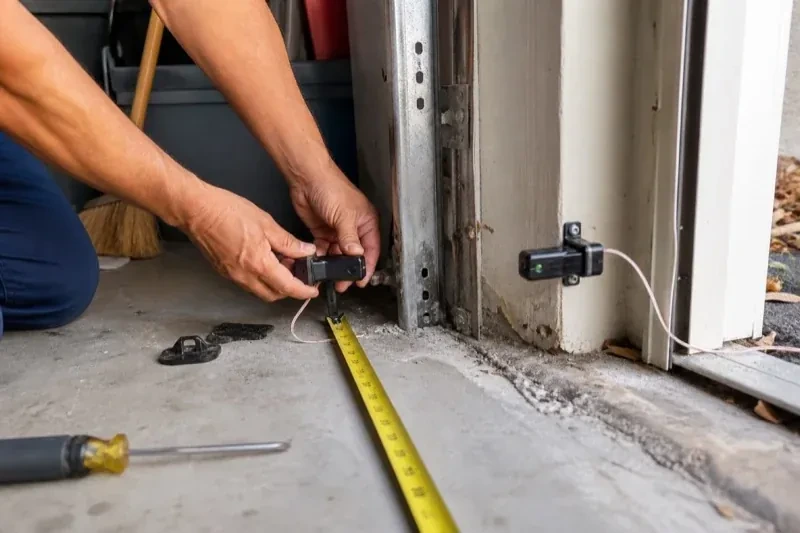
The two sensors have to sit at the same height, level, and facing each other squarely, no higher than about 15 cm (6 in) above the floor so the beam catches a small child or a pet. The technician measures both sides, because a bracket that has slipped a couple of centimetres down a track leg is enough to lose the beam. Each bracket is checked for bends from a bumper or a bin, for loose carriage bolts or wing nuts, and for rust where salt slush has sat against it for winters on end. A bracket screwed to a wall or the floor is checked for anchors that have worked loose.
- 2
Fitting a matched sensor pair
When a sensor has failed, the replacement is chosen for the opener rather than from a shelf of lookalikes. The technician confirms the make and generation from the head unit label, because sensors from one era are not always recognised by a board from another. The new sending and receiving sensors are mounted on the existing or new brackets at matched heights, wired with the connectors supplied, and brought up until both indicators glow steadily. Universal pairs exist for some operators and are used where they are documented to suit that model; where the opener is old enough that no compatible pair is made, the conversation moves to a modern operator.
- 3
The monthly beam test
The habit worth keeping takes about a minute. Once a month, with the door open, press close on the wall control and, as it moves down, pass a broom handle through the beam near the floor. The door should stop and climb back to fully open. Then lay a 2x4 flat under the middle of the door and close onto it; the door should touch it and reverse. If either test fails, stop using the opener; close the door first if it is not already closed, then use the manual release, and get help moving it by hand if it feels heavy or will not hold. A door that passes both tests is doing its job.
In the van
- Wing nuts and carriage bolts
- Protective wire channel
- Wall or floor angle brackets
- Receiving-eye sun shade
- Two-conductor low-voltage wire
What affects the quote
- 1
Protecting exposed wire
On a wall where the wire runs in the open, a slim protective channel or a re-route higher along the wall keeps bins, bikes and mice away from it, and is quoted as its own line.
- 2
Sun and reflection remedies
Swapping the sensors side to side is a small addition when the wiring reaches. Fitting a shade, or extending the wire so the receiver can move, is a little more and is listed on its own.
- 3
An opener without a sensor circuit
Where the operator predates monitored sensors and cannot accept a pair, the quote changes shape into a modern operator with its own sensors, which is discussed as a separate decision rather than folded in.
Same fees day, night or weekend.
Photo-Eye Sensor Alignment or Replacement: questions
How high off the floor should the sensors sit?
Low. The industry checklist expects the beam no more than roughly 15 cm (6 in) up from the floor, so that a small child, a pet or a bicycle wheel breaks it. Both sensors are set at the same measured height and level with each other, since a difference of a couple of centimetres is enough to lose the beam. Within that rule the technician can raise them a little to keep them out of the strip where slush collects.
Could the wiring be the problem rather than the sensors?
Frequently. The sensors are fed by a thin two-conductor wire from the head unit that crosses the ceiling and drops down both sides of the door, and it is pierced by staples, cut by shelving screws, chewed by mice or pulled from its terminals more often than a sensor fails. Both sensor lights dark, or an opener code for an open or reversed circuit, points to the wire. The technician tests the run with a meter and repairs or replaces the damaged section.
Could the door's force setting be the real reason it reverses?
Sometimes. The opener also backs up when it meets more resistance than its force setting allows: an iced seal, a limit that drives the door into the slab, rollers stiff with cold. From the driveway that looks identical to a beam problem. Timing is a clue, not proof, since a flickering beam can reverse the door partway and severe binding can trigger a force reversal right at the start; the sensor lights and diagnostic pattern settle which it is. The technician checks both so the right thing is fixed.
Openers & Access
Bigger photo, sooner job: Emergency Book soon Plan ahead
 Book soonGarage Door Opener Diagnosis and RepairThe door stops partway up for no reason, or opens fine and then refuses the next time.
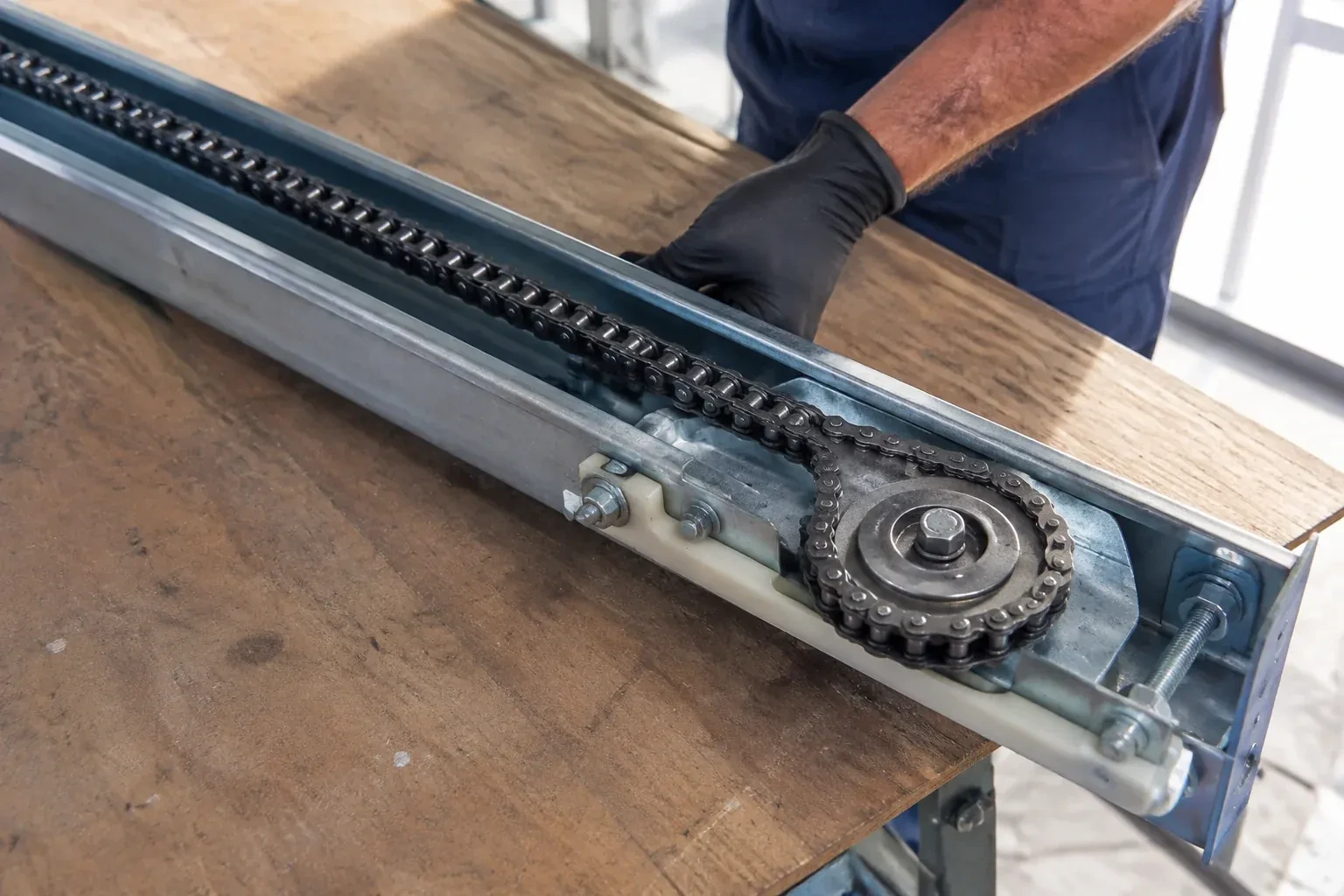 Book soonChain-Drive Opener RepairThe chain in the detached garage went orange with rust over the winter, the links are stiff, and the opener strains and groans to…
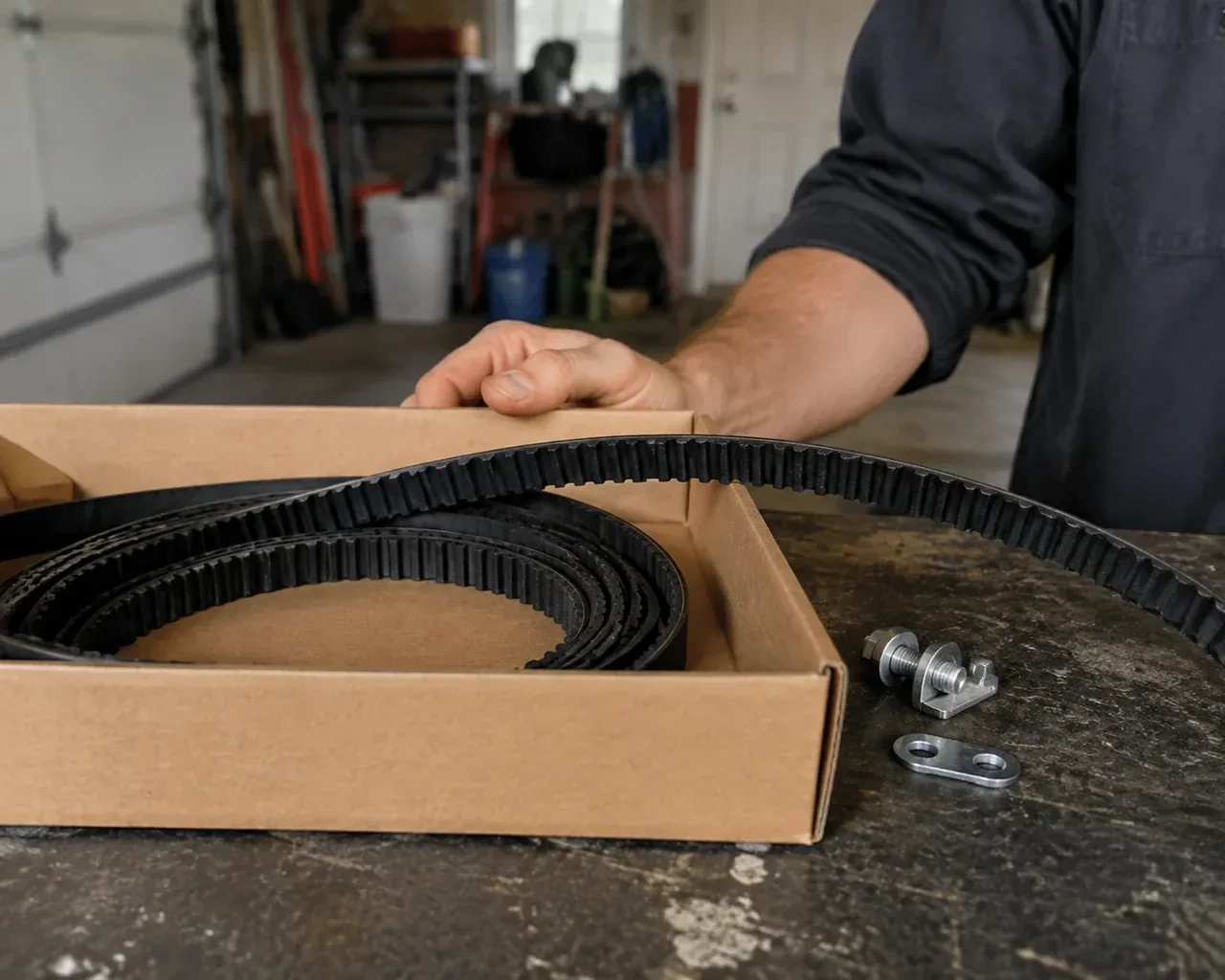 Book soonBelt-Drive Opener RepairThe door used to glide up with a soft hum.
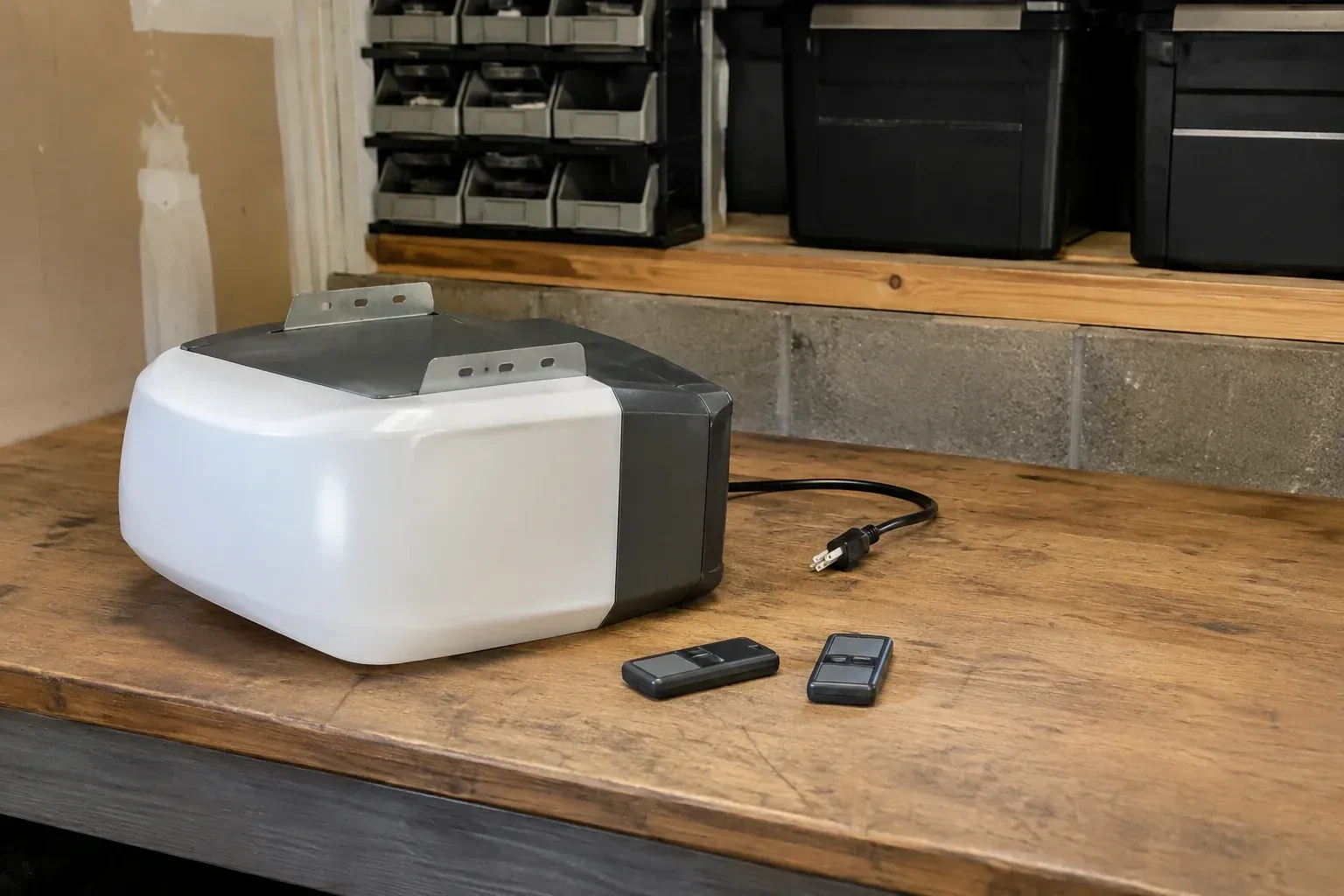 Plan aheadGarage Door Opener Replacement
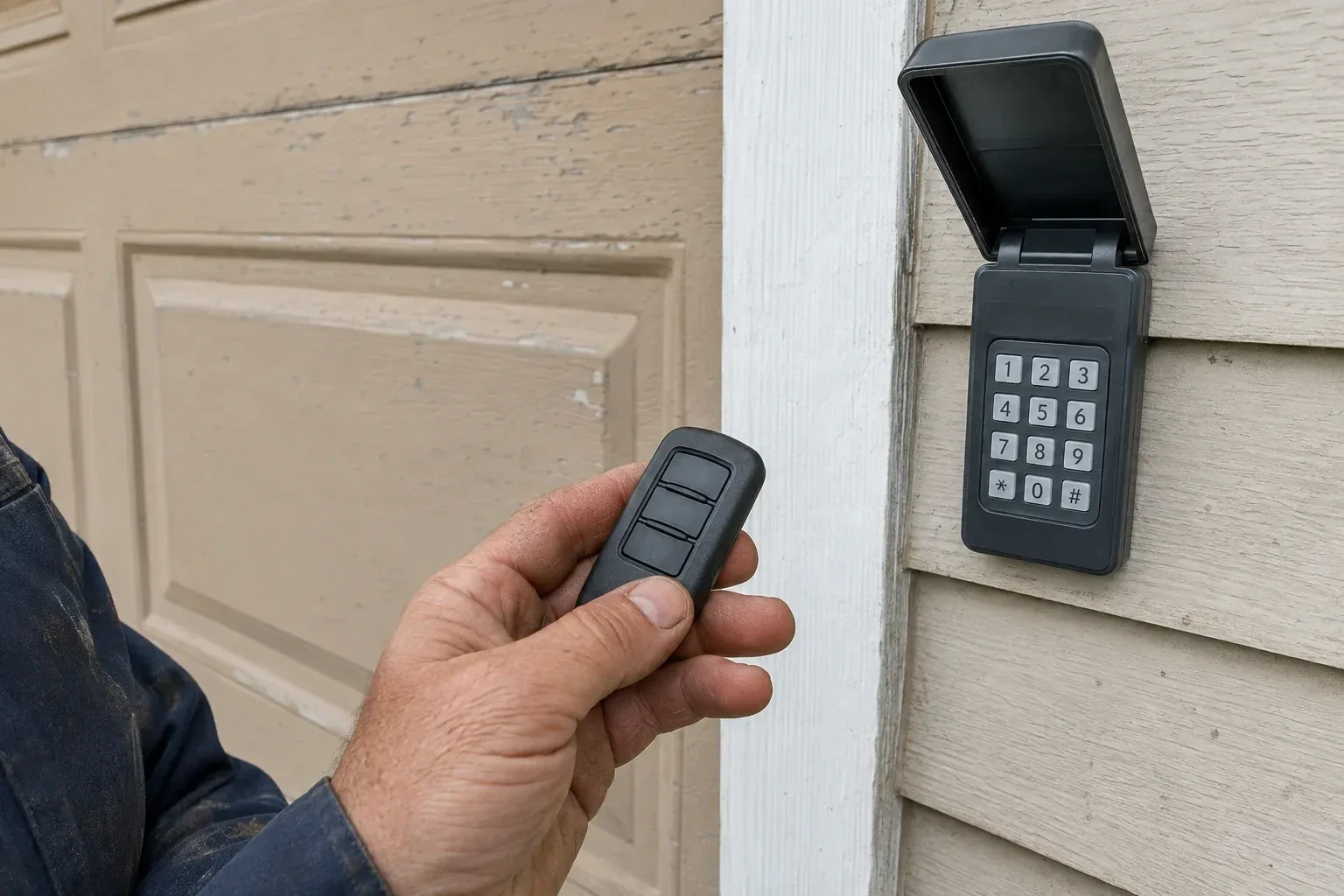 Plan aheadGarage Door Remote and Keypad Programming
Niagara, Ontario
Oakhill Forest information
- Town
- Oakhill Forest, Niagara, Ontario
- In business
- 25 years
- Hours
- Open 24/7 · nights, weekends and holidays, same fees
- Phone
- (289) 599-1971
- Visits
- On-site assessment preferred. Request a visit or call.
What the census means at the door
62%
Older homes. About 62% of homes in Fort Erie were built in 1980 or earlier, according to the 2021 Census.
In a mature neighbourhood the garage door is often the single largest feature of the front elevation, so keeping the original look matters. Modern insulated doors come in raised-panel and carriage styles that echo the older designs while running on today's torsion hardware.
83%
Mostly houses. Single-detached houses make up about 83% of homes in Fort Erie (2021 Census).
Detached houses commonly have attached two-car garages with a wide double door, which is a heavy door on a pair of torsion springs. Spring and cable work on these doors is done as a matched set so the door lifts level and the opener carries only its intended load.
Nearby
Open 24/7
Request a visit
On bright mornings the door will not close, then by lunchtime it behaves itself.
Call now · open 24/7(289) 599-1971- On-site assessment preferred
- Same fees day, night or weekend
- 25 years in business